
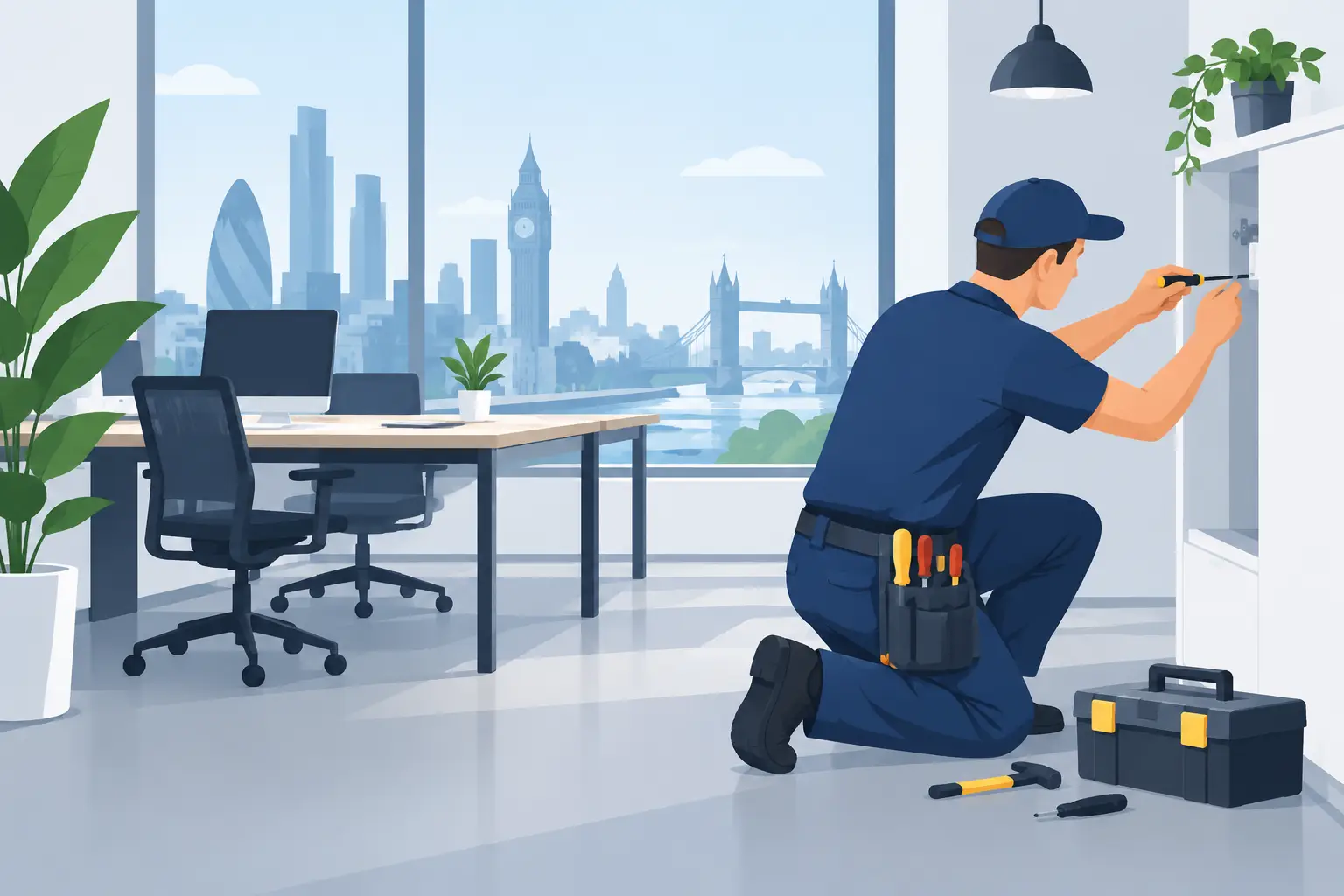
A loose door closer, damaged wall paint, flickering light, and wobbly desk may look like separate minor jobs. In a working office, they add up quickly: staff lose time, visitors get the wrong impression, and small faults become more expensive repairs. An office maintenance handyman London businesses can call for a range of tasks keeps those issues moving without the delay of finding a different contractor for every job.
For small offices, managed workspaces, retail back offices, and commercial units, maintenance is not only about appearances. It protects the building, supports security, and gives staff a safer, more practical place to work. The best approach is usually planned, responsive, and based on the real condition of the premises rather than a fixed checklist that misses obvious problems.
What an Office Maintenance Handyman Can Handle
A capable handyman service covers the practical repairs that do not always justify calling a specialist trade on its own. This may include assembling and securing office furniture, fitting shelves and noticeboards, hanging mirrors or pictures, repairing minor damage to walls, adjusting internal doors, replacing locks, fitting blinds, resealing sinks, and touching up paintwork.
These jobs matter because office wear and tear is constant. Chair wheels mark walls, delivery traffic damages corners, cupboard hinges loosen, and communal kitchen areas take more use than expected. Resolving them promptly prevents a tired-looking workspace from becoming the accepted standard.
There is a clear limit, however. Electrical work, major plumbing faults, structural repairs, and larger installations may require a qualified specialist. A multi-trade maintenance company is useful here because it can assess the issue, complete the straightforward work, and arrange the right trade where the scope calls for it. One point of contact is often far easier for an office manager than coordinating several contractors.
Prioritize Faults That Affect Safety and Security
Not every repair needs the same response time. A scuffed wall can wait for a planned maintenance visit. A damaged lock, broken door, water leak, or loose handrail should not. Office managers should separate cosmetic tasks from faults that could affect access, safety, business continuity, or the building itself.
Security problems deserve particular attention. A lock that sticks, a door that will not latch properly, or damaged hardware after an attempted break-in can leave equipment, documents, and staff exposed. Fast lock repairs, replacement locks, door adjustments, and temporary securing work are valuable when a problem happens outside normal office hours.
Water is another issue that should move quickly. A slow leak beneath a kitchenette sink or around a toilet can damage cabinets, flooring, and neighboring areas before it is noticed. Water damage marks on ceilings and walls may point to a problem above rather than an old cosmetic stain. The visible mark can be repaired, but the source needs to be identified first.
Use Planned Visits for the Small Jobs That Pile Up
Most offices have a running list of maintenance tasks that no one has time to organize. A planned half-day or full-day visit can be more cost-effective than arranging separate callouts for each small repair. It also gives the contractor a chance to spot related issues, such as a door that needs both hinge adjustment and a new closer, or a damaged wall that should be repaired before decorating.
Keep a simple maintenance log between visits. Include the location, the fault, when it was first noticed, and whether it affects staff or customers. Photos are useful for damage, leaks, doors, locks, and external areas. This helps the handyman arrive prepared and makes a job-specific quote more accurate when materials or specialist work are needed.
For offices with regular tenant changes, client visits, or flexible workspace use, schedule maintenance before it becomes urgent. A check before a new occupier moves in can cover locks, door furniture, wall repairs, shelving, kitchen fittings, and basic decorating. It is much easier to complete this work in an empty room than around active teams.
Common Areas Need More Attention Than Private Offices
Reception areas, meeting rooms, kitchens, restrooms, corridors, and entrances receive the most traffic. They are also the spaces clients and visitors see first. A cracked tile, peeling paint, loose coat hook, or poorly closing restroom door can make an otherwise well-run business feel neglected.
Kitchenettes need practical checks. Loose cabinet handles, failed sealant, damaged worktops, dripping taps, and poorly fitted appliances can create avoidable disruption. Restrooms need the same approach, with particular attention to leaks, partitions, locks, fixtures, and damaged tiles. Small improvements in these areas make a noticeable difference to daily comfort.
External maintenance should not be ignored. Gates, entrance doors, signage fixings, exterior lights, fence panels, and security hardware all affect how safely people enter and leave the premises. Weather and regular use take their toll, particularly on commercial doors and hardware. Addressing early signs of movement, corrosion, or damage is usually cheaper than replacing failed components later.
Choose a Handyman Service With the Right Coverage
The lowest hourly rate is not always the best value if the contractor cannot complete the job or needs repeated visits. Ask what types of work are covered, whether materials can be supplied, how larger jobs are quoted, and whether emergency support is available. For a commercial property, reliability and clear communication often matter as much as the repair itself.
A good provider should explain what is included, flag any work that requires a specialist, and give a realistic timescale. Fixed quotes are often appropriate for clearly defined repairs or refurbishment work. Hourly or full-day rates can suit a varied task list where the exact time needed is difficult to predict. The right option depends on the condition of the office and how well the work has been scoped.
It is also worth confirming access arrangements. Can work be completed before staff arrive, after closing, or at weekends? Are there building management rules, loading restrictions, or parking limits? Giving this information early avoids wasted time and helps keep disruption to a minimum.
When a Repair Becomes a Refurbishment Job
Repeated patch repairs are sometimes a sign that a larger piece of work is due. A kitchen with swollen cabinets and recurring leaks, a restroom with cracked tiles and failed sealant, or a meeting room with heavily damaged walls may be better handled as a focused refurbishment. This is not always the cheapest first step, but it can reduce future disruption and present a more professional space.
The same applies to security. Replacing a single lock may solve an immediate problem, while a review of doors, frames, external lighting, and access points may be more sensible after a break-in or repeated damage. The scope should reflect the risk, the age of the building, and the value of the assets inside.
A2Z-Maintenance supports London offices with everyday handyman jobs as well as carpentry, decorating, lock repairs, building work, and larger kitchen or bathroom projects. That wider trade coverage means a small repair does not have to become a search for several unrelated contractors.
Keep Your Office Ready for Work
Good office maintenance is rarely dramatic. It is the steady work of fixing faults while they are still manageable, keeping shared spaces presentable, and responding quickly when security or water damage cannot wait. Start with the jobs staff mention most often, give urgent defects priority, and keep a clear list for planned visits. A well-maintained office lets people get on with their work instead of working around the building.



Leave a Comment